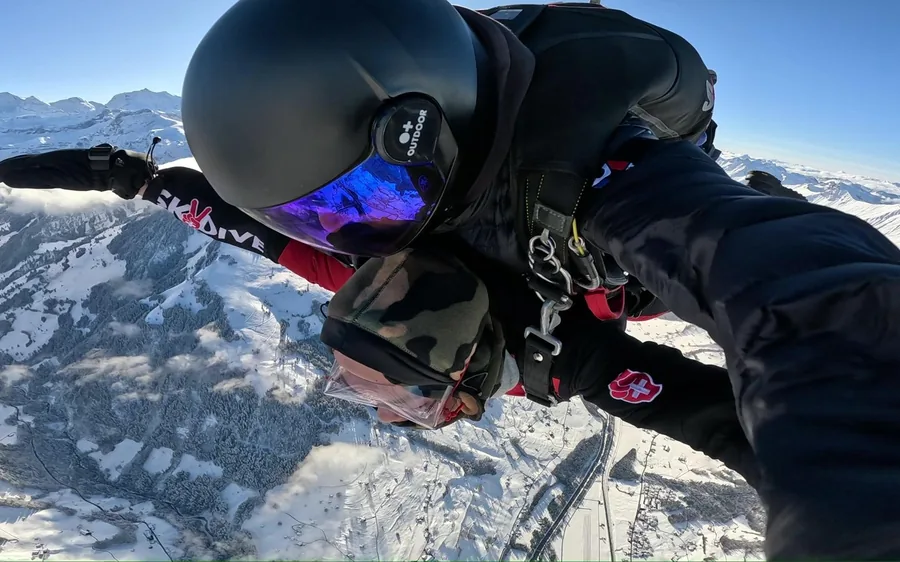
Our top pick586 reviews
3.5 hAirplane Skydiving over the Swiss Alps
★ 4.9 · 586 reviews
- 3.5 hours, Freefall over the Swiss Alps
- Instructor, gear and briefing
- Longest flight here
- Free cancellation
$526$150.29 / hour
Check availability→ What to wear
The short version is that the operator dresses you for the jump and you dress yourself for the day. $526 names the skydive, a safety briefing, the skydiving equipment and a tandem master in the fare, one instructor to one client, so the jumpsuit and the harness are waiting for you at Reichenbach. What you supply is what goes underneath: comfortable layers and closed, laced shoes that will stay on your feet through 45 seconds of freefall at 200 km/h (120 mph) and 5 to 7 minutes under the canopy. This page sets out exactly who supplies what, and the handful of small things worth putting in a pocket.
Quick answer
The short answer. Wear comfortable clothes you could walk in and closed, laced shoes that stay on your feet without being held — trainers or light boots are ideal. Everything technical comes from the operator: the fare for $526 names the skydiving equipment, a safety briefing and a tandem master, so the jumpsuit and harness go on over your own clothes at the airfield in Reichenbach. Tie long hair back. Skip anything loose around the neck or wrists. Bring a warm layer to leave on the bus for standing around the field afterwards, and a way to pay for the handcam footage, which is bought at the airfield rather than online.
Who supplies what
The suit, the harness and the instructor are in the fare. The clothes and shoes are yours.
This is the question with the simplest answer on the whole site, and it is worth stating plainly before the detail. The listing for $526 includes four things: the skydive, a safety briefing, the skydiving equipment and a tandem master. One instructor per client, attached to you from the door of the aircraft to the landing field. That means the jumpsuit, the harness and the goggles are part of what you have already paid for, and they are fitted by people who fit them every working day.
What is not in that list is ordinary clothing, and it is not in the list because it is yours. You arrive at the Outdoor Höheweg Shop at Höheweg 95 in Interlaken in what you intend to jump in, travel the thirty minutes to Reichenbach in it, and the suit goes on over the top when it is your turn. There is no changing room stage to plan for and nothing to pack beyond a small bag you leave with the bus.
So the practical question narrows to two items: what goes under the suit, and what is on your feet. Everything else on this page is a footnote to those two. Get them right and you will not think about clothing again all morning, which is the point — the booking runs 3.5 hours door to door and none of that time should be spent worrying about a shoelace.
One more piece of the fare is worth knowing here, because it changes what you carry. Photos and video of the jump are filmed on a handcam worn on the wrist of your instructor and paid for separately at the airfield. That is why there is no reason to bring a camera or a phone into the air, and every reason to bring a way of paying on the ground.
The detail
Closed laced shoes, thin comfortable layers, hair tied back, nothing dangling.
Shoes are the item to get right. Closed, laced and snug: trainers, light hiking shoes or light boots. The test is whether they would stay on if nobody held them, because for 45 seconds at 200 km/h (120 mph) nobody will. Sandals, slip-ons, flip-flops, clogs and heeled boots all fail that test, and the walk in and out across a grass field at Reichenbach is a second reason for something closed. If you own hiking shoes and you are in Interlaken, you almost certainly have the right footwear in your room already.
Layers under the suit, not bulk. The jumpsuit goes over what you are wearing, so think thin and comfortable rather than thick. Leggings or trousers with some give in them, a long-sleeved top, and in the colder half of the year a thin thermal layer underneath. What does not work is anything stiff, anything voluminous, or anything you would not want to sit in for the climb to 4,000 metres — that climb is several minutes on a bench with a harness on.
Tie long hair back, before the suit goes on. This is the most common small regret people report after a jump, and it is solved by an elastic band in a pocket. Goggles come from the operator and will hold most of it, but a tie does the rest.
Leave jewellery and loose accessories on the ground. Scarves, dangling earrings, loose hats, sunglasses on a cord, anything that hangs. None of it enjoys 200 km/h (120 mph), and the bus back to Interlaken is a far better place for it than the sky above Reichenbach. Sunglasses in particular are ground-only: goggles go on for the jump.
Glasses and contact lenses. If you wear contacts, wear them and the goggles go over the top. If you wear spectacles, mention it at the briefing — the instructor fits goggles every day and has seen it before. This is exactly the kind of thing the briefing stage exists for.
Bring a warm layer for afterwards, and leave it on the bus. Standing on an open field at Reichenbach waiting for a slot or waiting for the handcam footage is the part of the day you feel the weather in, not the jump. A fleece or a light jacket in the bag covers it, and you will not carry it into the air.
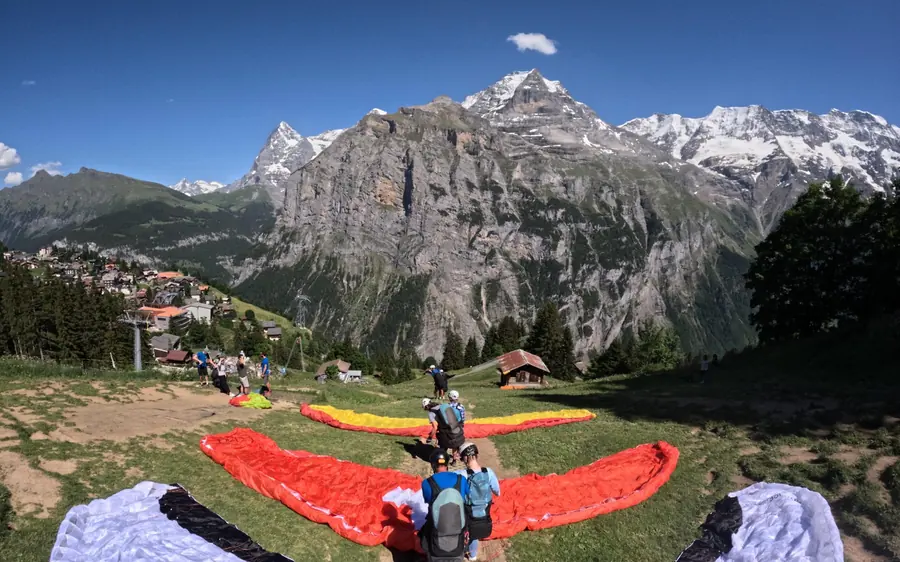
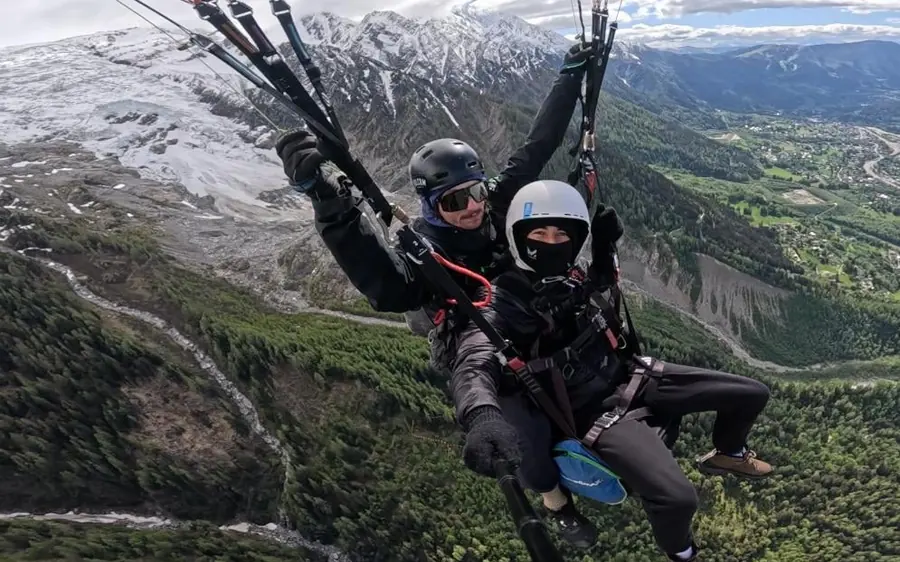
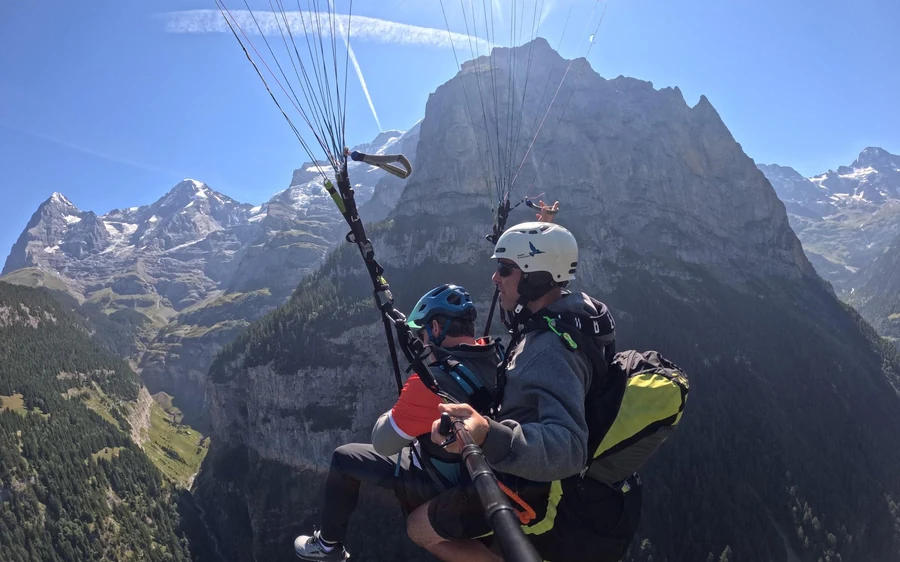
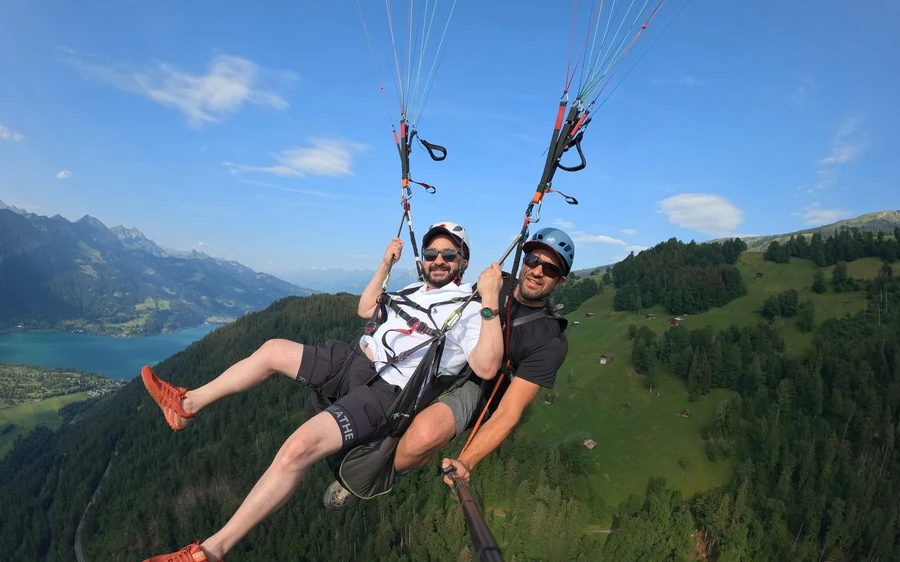
If you are flying rather than jumping, the kit list is similar and the operator supplies more of it. The nine tandem paragliding listings on this site name their gear in the fare: $222 includes a qualified pilot, the equipment, hiking boots and transport; $234 names mountain shoes, flight equipment and a safety briefing; $209 names a helmet, insurance, space to transport small items and boots or a jacket when necessary; and the Zermatt flight goes furthest, naming a flysuit to keep you warm along with a helmet, hat and gloves. Those flights also launch from mountain slopes rather than climbing to 4,000 metres, which is why they fly in a wider band of conditions than the aircraft does — a genuine advantage if your week in Interlaken is short. Either way, the clothing advice is the same one sentence: closed shoes, comfortable layers, nothing loose.
Who brings what
The left column is the whole kit list for a tandem jump. The right column shows where each line comes from, and only the operator lines are inside the fare.
| Item | Who supplies it | Detail | Named on |
|---|---|---|---|
| Jumpsuit and harness | The operator | Named in the fare as skydiving equipment | $526 |
| Goggles and headgear | The operator | Part of the same skydiving equipment line | $526 |
| Your tandem master | The operator | One instructor to one client, attached for the jump | $526 |
| The briefing | The operator | A safety briefing is named in the fare | $526 |
| Clothes under the suit | You | Comfortable layers you can move and sit in | Not in any listing |
| Shoes | You | Closed, laced, staying on your feet without being held | Not in any listing |
| Hair tie, if your hair is long | You | A small thing that matters at 200 km/h (120 mph) | Not in any listing |
| Photos and video | Paid on the day | Handcam on the wrist of your instructor, extra cost | $526 |
Summer or winter kit
One thin layer in summer, one thermal layer in winter, the same shoes all year.
The only real clothing decision in this niche is how much to put under the suit, and it comes down to the half of the year you are in.
The warm half of the year. One thin layer is plenty: trousers or leggings, a long-sleeved top, trainers. The jumpsuit the operator supplies does the rest, and anything more will be too much while you are waiting on the field at Reichenbach. Take the warm layer anyway and leave it on the bus.
The cold half of the year. Add a thin thermal layer under the same clothes rather than a thicker jumper over them. Bulk is the enemy here: the harness needs to sit properly and you need to be able to move. Light boots instead of trainers make the walk across the field more comfortable, and gloves are worth having in a pocket for before and after.
What does not change with the season. Closed laced shoes, hair tied back, nothing loose or dangling, and a way to pay for the handcam footage at the airfield. Those four lines are the same in every month, because 45 seconds at 200 km/h (120 mph) is the same in every month.
The verdict. Dress as if you were going for a short walk in the Alps on that day, then add nothing. Book $526 and let the operator handle the rest: the fare names the skydiving equipment, the safety briefing and a tandem master one-to-one, and it holds 4.9 across 586 reviews. If you are also flying that week, $222 includes hiking boots with the pilot and equipment, which means the same pair of comfortable clothes covers both days in the air.
Getting there
There is no changing stage in this day. You arrive dressed, and the suit goes on over the top at the airfield.
| Stage of the day | How long | What happens | Named on |
|---|---|---|---|
| Arrive dressed to jump | Before check-in | There is nothing to change into: your own clothes go under the suit the operator supplies | $526 |
| Check in at Höheweg 95 | Start of the booking | The meeting point is the Outdoor Höheweg Shop at Höheweg 95 in Interlaken | $526 |
| Transfer to Reichenbach | 30 minutes | Jumper seats only; leave the spare layer and the bag on the bus | $526 |
| Briefing | Before the climb | A safety briefing with the tandem master who will be attached to you | $526 |
| Suit, harness and goggles fitted | Before boarding | Skydiving equipment is named in the fare and fitted by the operator | $526 |
| Freefall and canopy | 45 seconds plus 5 to 7 minutes | Everything you are wearing has to stay on at 200 km/h (120 mph) | $526 |
| Handcam footage, if you want it | After landing | Filmed from the wrist of your instructor, paid for separately at the airfield | $526 |
What to bring
Nothing here is bulky and nothing here is technical. The technical half of the day is supplied by the operator and named in the fare.
| What | How necessary | Why | Where it lives |
|---|---|---|---|
| Closed laced shoes | Essential | Trainers or light boots that stay on without being held | Wear them from town |
| Comfortable layers | Essential | What you would wear for a walk on the day, nothing bulky | The suit goes over the top |
| A hair tie | If it applies | Long hair and 45 seconds of freefall want tying back | Pocket-sized |
| A warm layer for afterwards | Recommended | For standing around the field at Reichenbach | Leave it in the bus |
| Sunglasses | Optional | Goggles go on for the jump, so these are for the ground only | Not worn in the air |
| A payment method | Recommended | Handcam footage is bought at the airfield, not online | On the day |
| Your booking reference | Essential | Checked at the Outdoor Höheweg Shop at Höheweg 95 in Interlaken | On your phone |
When to go
Summer: one thin layer. Winter: one thermal layer and light boots. Everything else is the same.
Clothing is the one part of planning a jump in Interlaken that the calendar genuinely touches, and it touches it lightly. In the long-daylight half of the year a single thin layer under the suit is enough. In the short-daylight half, swap it for a thermal layer and put light boots on instead of trainers. That is the whole seasonal difference.
What the season does change is planning, and that belongs to the other pages of this site: how many slots an operator has in a day, and how quickly the single jump sold in Interlaken fills up. The practical habit is the same in every month — book $526 for an early day of your stay and keep that day loose, because the booking runs 3.5 hours door to door from the Outdoor Höheweg Shop at Höheweg 95 in Interlaken to the field at Reichenbach and back. The listing publishes free cancellation up to 24 hours in advance.
If the colder months are your window and you want to be certain of getting into the air, the tandem flights are worth booking alongside. They fly through the year from slope launches, and their kit lists are generous: a flysuit to keep you warm, helmet, hat and gloves on the Zermatt flight; a helmet and boots or a jacket when necessary on $209; hiking boots, equipment and transport on $222.
Common mistakes
Five of the six are solved by closed shoes and a small bag left on the bus.
Before you book
Half a minute now saves the only part of a jump day you can actually get wrong yourself.
Closed and laced, and they stay on without being held. Trainers or light boots. This is the one non-negotiable line on the list.
Thin and comfortable, because the jumpsuit from the operator goes over them and the harness over that. Add a thermal layer in the colder months rather than a thicker jumper.
A hair tie if your hair is long, nothing loose around your neck or wrists, sunglasses for the ground only — goggles come with the equipment.
$526 names the skydive, a safety briefing, the skydiving equipment and a tandem master, one instructor to one client. You are not expected to bring anything technical.
Photos and video come from a handcam on the wrist of your instructor and are paid for on the day at Reichenbach, not online with the ticket.
Dressed and ready? The tandem skydive over the Swiss Alps is $526 with the suit, the harness, the briefing and your tandem master included — 45 seconds of freefall from 4,000 metres, 4.9 from 586 reviews, free cancellation up to 24 hours in advance.
See the jump and all nine tandem flights→Book direct
Ten live listings with the fare, the length and the hourly cost on each card. Every one of them names the equipment inside the fare.
★ 4.9 · 586 reviews
★ 4.9 · 2,580 reviews
★ 5.0 · 655 reviews
★ 5.0 · 367 reviews
★ 4.9 · 328 reviews
★ 4.9 · 194 reviews
★ 4.7 · 73 reviews
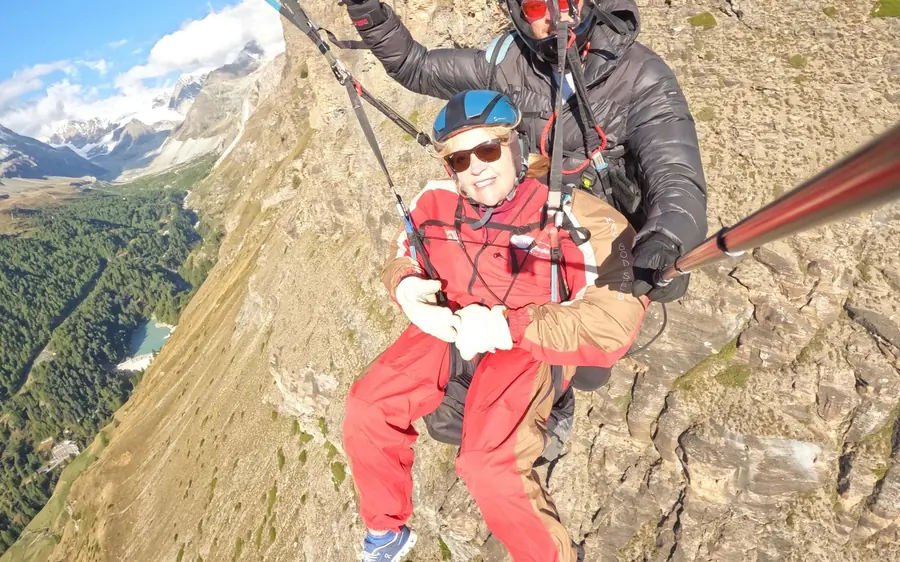
★ 5.0 · 66 reviews
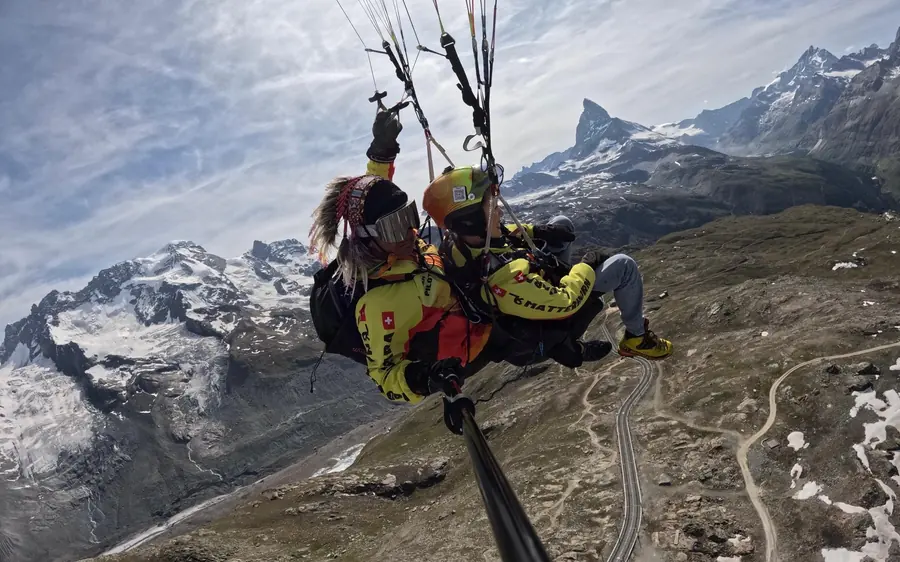
★ 4.9 · 42 reviews
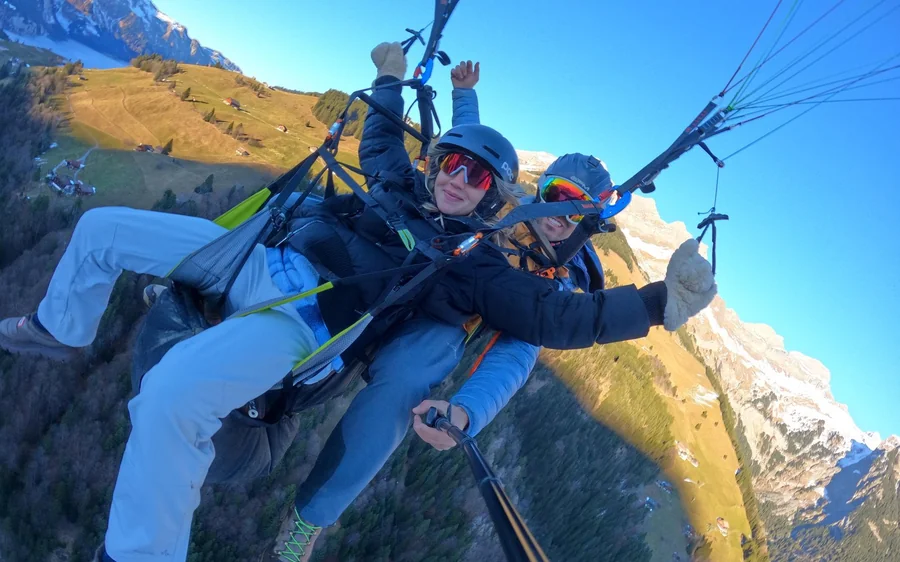
★ 4.9 · 24 reviews
Common questions
Comfortable clothes you could walk in and closed, laced shoes that stay on your feet without being held. The jumpsuit, harness and goggles come from the operator: $526 names the skydiving equipment, a safety briefing and a tandem master in the fare, one instructor to one client. Tie long hair back and leave anything loose or dangling in your bag.
Trainers, light hiking shoes or light boots — anything closed and laced. The test is simple: if they would not stay on unheld, they are not right for 45 seconds of freefall at 200 km/h (120 mph). Sandals, slip-ons and flip-flops do not work, and closed shoes are also better for walking across the grass field at Reichenbach.
Yes. Skydiving equipment is one of the four things named in the fare on $526, alongside the skydive itself, a safety briefing and your tandem master. The suit goes on over your own clothes at the airfield, so there is nothing to change into and nothing to buy beforehand.
Your booking reference, closed laced shoes on your feet, a hair tie if you need one, a warm layer to leave on the bus for standing around the field, and a way to pay at the airfield for the handcam footage, which is filmed from the wrist of your instructor and charged separately. Everything technical is already in the fare.
Contact lenses are straightforward: goggles from the operator go over the top. If you wear spectacles, say so at the briefing — fitting goggles around them is an everyday part of the job for a tandem master, and the briefing stage is exactly where to raise it.
One layer different. Swap the thin layer under the suit for a thermal one and wear light boots instead of trainers; everything else on the list stays the same. If you are flying rather than jumping that week, the Zermatt tandem listing names a flysuit to keep you warm with a helmet, hat and gloves, and $209 names boots or a jacket when necessary.
Go deeper
The airplane jump over the Swiss Alps, what the day looks like and what it costs.
What it costsThe fare, what is included and what photos and video add.
Helicopter jumpWhat people mean by a helicopter jump here, and what is bookable.
Over the AlpsWhat you see from altitude: the Jungfrau wall, the lakes and the valley.
Your first jumpFrom check-in to landing, minute by minute.
Airplane Skydiving over the Swiss Alps
★ 4.9 · 586 reviews · Free cancellation 24 h